“It is impossible to project a world that will not appear to some one to be a deformation.” – Wallace Stevens
 We’re all deformed.
Not our faces, although I have to say my own is getting a bit droopy through the middle. Wallace was talking about our philosophies, our modi operandi, our inner faces where they meet the world. We each work out our own truths and come to our own strange accommodations. In this way, Wallace believed, our individual imaginations shaped the cast of our individual realities.
Mostly this happens unconsciously, but of course it can also happen consciously and deliberately. This latter is actually not a bad definition of “practice”: meditation practice, spiritual practice, art practice, psychotherapy practice, physical practice, healing practice, work practice. We dedicate our knowing in a particular direction, and as we do, new subtleties and meanings emerge. You might say the world gets more complete along the grain of our commitments.
If we are awake to this, if we pay attention, we begin to learn things about the particulars of who we are, but we may also feel – in some inexpressible way – that we are coming to know something more general about who everyone and everything else is too.
 This mystical perspective is something Wallace himself was passionately interested in, although he doubted it too, as many thinking people do (as I did). The exact nature of this “something more general” is impossible to capture in words, for, as every mystic in every era has rather helplessly declared, it is larger than the mind’s categories and concepts. We can only describe our experience, and then as through a glass, darkly.
For myself, I can say that via my practice, I enter periods when my experience feels more immediate and real and synchronized with the people and events around me. At these times there is a wonderful peace and completeness. I feel myself to be more effective in my life, more present for others, more generous and compassionate and available.
And then, inevitably, the naturalness and the accompanying insights fade, obscured by some new intensity or challenge. I reach and I grab – for life is hard, and who doesn’t secretly wish it will all just click? And of course, in the reaching, the completeness recedes. Fuck. Really? Back to this neurotic shit-show? Yup.
Hours, days, weeks, months pass. At some point I remember I have a heart. It has a voice. It says: “keep practicing, little brother.” So I do. Even if it feels hollow, like I’m just going through the motions.
Eventually I’m so desolated by the loss of what I once imagined was my “expertise,” that I accidentally give up. And right then, like an old friend, my own existence comes back to meet me, wearing a new face. I remember: it was never not there. I had just forgotten, carpeted my life with some new fixed idea about how everything is supposed to be.
“An ‘insight-mind,'” says the Buddhist teacher Ashin Tejaniya, “is not permanent, it only last a moment. What perpetuates, what remains ‘alive,’ is its quality, its potential. Unless we keep nurturing this quality it can fade away.”
Programming a Pluralistic Paradigm of Practice
So. What is your practice? What qualities and potentials do you nurture in the particulars of your commitments?
 In 2017, the Consciousness Explorers Club is rolling out a new programming paradigm. Starting in January, each month will be dedicated to a particular path of practice: mindfulness, surrender, concentration, intellectual inquiry, art, emotional health, the body, nature, story, action, devotion, and finally – in December – Rock n Roll, our path of celebratory freedom and jackassery, where we explode the whole year, and start over again with some new configuration (parenting? sex? medicine? nonduality? politics?).
Our in-house name for this ever-shifting model is the “CEC Diamond.” Or, if you prefer, the “Pluralistic Pizza.” Here are twelve slices for 2017:

The idea is:
- almost any domain or activity in life can be approached as an intentional practice
- the people who specialize in these domains or activities have learned important things about their own lives and – let’s imagine – human life more generally
We want to draw this wisdom out. Not from the perspective of some other path, but from the perspectives of the actual people who live inside their paths. What does a professional poet have to say about how their art has helped them find connection and fulfillment and understanding – and what might they say about how it hasn’t? And what about an athlete, or a field naturalist, or a book-besotted analytic philosopher? Can we speak honestly about the gifts of our commitments, as well as their inevitable deformations?
The Invisible Centre and Why It Matters
 I find this thrilling to write about. To champion the integrity of different paths, obviously, but also to defend the possibility of an “invisible centre.”
This is Mysticism 101, wildly unpopular in the largely secular intellectual mainstream. Call it “Absolute,” call it “zero,” call it “God” or “source” – a fundamental direction in experience that cannot be named or grasped, and yet it can be oriented to, expressed in different ways.
Expressions like “oneness” in the path of unifying concentration. “Wisdom” in the path of intellectual inquiry. Synchronizing “flow” in the path of body and movement. “Meaning” in the path of story, “inter-being” in the path of nature, “justice” in the path of appropriate action, “love” in the path of devotion and connection. And so on.
Each of these expressions is real as an experience, not simply as an ideal. Real, yet also – paradoxically – ever-more real, for “reality” in this sense is on a continuum, stretched towards an organizing singularity. Dropping in, we feel a quickening – a renewed intimacy with the weird fact of our own existence.
This matters. These expressions, these directions, they nurture us. They diminish our fear and our alienation and they liberate our fulfillment. They can also – take note all caregivers and would-be activists – supercharge our capacity to notice and care for and make meaningful change in the world. They are how we come into our truth.
But don’t take my word for it. What directions – what invisible centres – have revealed themselves in your experience? What do you orient to at the deepest level, and how did you figure it out?
Mindfulness and Emptiness
 We start in January with mindfulness, the art of paying careful attention to the moment. Many practitioners have found that, over time, inner and outer experience can thin-out. We begin to orient to its “empty,” constructed aspect. Solid objects and even solid selves are understood to be assembled on the fly – blooming, pixelating, and disappearing over and over again. Yet this emptiness is not barren or blank – rather, it is lush, shimmering, “a generative unfolding of something and nothing” to use Avi’s fine phrase. Emptiness (like its paradoxical flip-side, awareness) can become a kind of background to orient to, regardless of what is happening in the foreground of our lives.
It’s a specialist training, I admit – but worth exploring, especially for nerds. Is emptiness somehow more fundamental than other facets? It might be. Whatever the case, there are other paths for other temperaments. My own hope is the CEC Diamond can become a way for people from all backgrounds to explore what is meaningful and true in their experience. No matter who we are, we can find a way to sacralize our lives, and share what we learn with each other.
Sharing Wisdom Between Worlds
Religion, and spirituality more generally, is filled with people (like me!) projecting their ideals and experiences onto everyone else. It happens in the secular world too.
 I’ve fallen for it many times – I’ve foolishly judged my own experience by the standards of someone else’s. Some other teacher or authority’s notion of “progress,” or “awakening,” or “truth.” It can mess you up. Eventually I figured out what any grandparent could have told me, had I thought to ask (or listen): our truths are for us to work out – no one else.
For six years now the Consciousness Explorers Club has sought to be a welcoming forum where you are allowed to investigate both hand’s-on meditation and personal growth practices, as well as big existential questions about the nature of the whole enchilada. We explore how practices seem to work, and we explore how to bring their insight to our lives – our lives of work and activism, of relationship and struggle, of redemption and incompleteness.
We do this with playfulness, and – we hope – with a generous proportion of existential humility. We meditate, and we celebrate, and then – tentative, teetering – we activate. Together. The best way we know how.
Happy 2017 to all my beautiful friends.
Jeff Warren
Chief Exploring Officer, The Consciousness Explorers Club
 Meditation teacher and writer Jeff Warren and our host Dan Harris reflect on their January 2017 road trip, in which they traveled from New York City to Los Angeles to talk with people about what keeps them from meditating, and in the process, the two friends discuss how meditation has helped them work through their own personal struggles. Their new book on their journey, written with Carlye Adler, is called “Meditation for Fidgety Skeptics: A 10% Happier How-to Book.”
 Sandler: “If you’ve ever wanted to quiet your mind, and get in the zen zone, then do we have the show for you!


 This a companion piece to “
 I had no idea when I agreed that the project would expose a deeper layer of my own peculiar brand of mental struggle. Our narrative is a road trip across America, where we meet real people wanting to build a meditation practice. We help them with different stumbling blocks, from the worry that they’re not doing it right, or might lose their edge, or open a Pandora’s box, through to more structural obstacles like finding the time to meditate, building continuity in a practice, and so on. One by one, from cops to caregivers to celebrities, we share their stories and concerns, all while rolling out what we hope is a lively teaching curriculum. It’s both a journalistic adventure and a how-to-meditate book.
  ADD is a funny thing. To many, it can seem like an invented problem, or maybe some vague condition that everyone suffers from a bit in these techno-distracted times. The latter may be true, but not the former (although it is probably over-diagnosed). Full-blown ADD – which I have – is sometimes called “executive function disorder.” It’s a
  The only tool you have to help yourself – your mind – is the very thing pulling you down. And down. And down.
 The bottom line is we don’t know yet what meditation can and can’t do. What I can say is that when I think about mental health, I think about a much broader safety net of practice and support, one that includes community, nature, exercise, diet, psychotherapy, and – for most of us – a structured daily routine.
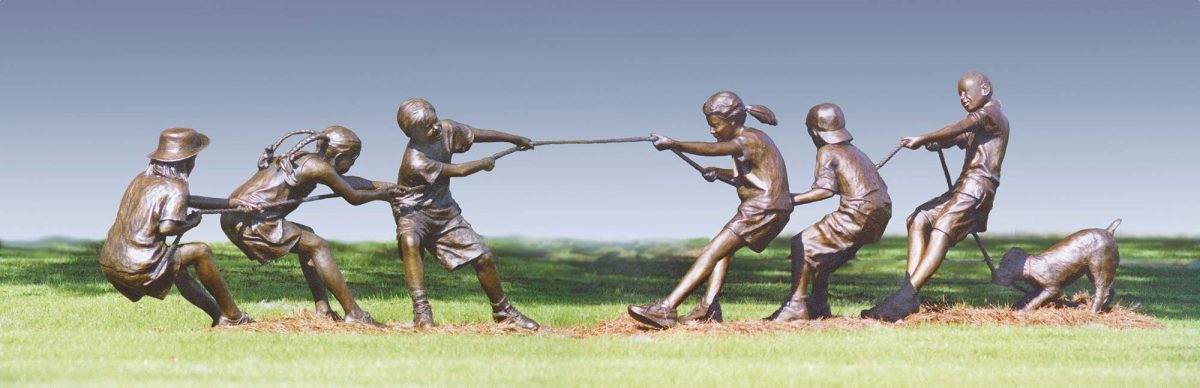
 Many of us are at war with ourselves. We’re divided, we have mixed feelings. We’re of two minds, of four minds, of eight minds. How many minds do we have in there?
 It wasn’t until I began meditating that I realized what a divided mess I was. Listening to my various neuroses sing, off-key, in a deranged internal choir. One group singing ‘cheeseburgers now!’ one obsessing about witty repartees I should have made, yet another about whether I was even doing this stupid meditation thing correctly. And then, deeper down: who I thought I was, who I thought they wanted me to be, my fears, my insecurities, and all the rest of it. Boring to others, inescapable to yourself, and thus … even more hideously boring.


 Anyway, to return to my stupid map and theory, after a breakthrough, if you’re practicing well, you don’t entirely return to where you were. But neither do you sustain the dizzying heights of your peak experience. That’s because, although you may have a better view, you still have a lifetime of ridiculous habits behind you. The gap between what you know and where you actually are is, to say the least, sobering. It can bum a person out. This is the terrain of challenge. The fruit of the final terrain, integration, seems to arrive only when we accept this. It’s what allows you to ultimately update your life and behavior to reflect your understanding. Another word for this is maturity.


 This zooming out might be particularly useful right now, on the cusp of this anxiety-inducing US election. People – myself included – really are freaked out about the deep divisions in the US. The theory about meditation is it can help us get space around such tough emotions and, in turn, make better – saner – responses.
