All Blog Posts

Human 2.0 | Mind Upgrade Podcast

From the Human 2.0 | Mind Upgrade Podcast : “Too busy to meditate? Can’t turn off your brain? Curious about mindfulness but more comfortable in the gym? This episode with Jeff Warren is for you.

From the Human 2.0 | Mind Upgrade Podcast : “Too busy to meditate? Can’t turn off your brain? Curious about mindfulness but more comfortable in the gym? This podcast episode with Jeff Warren is for you.

In Meditation for Fidgety Skeptics, Harris and Jeff Warren, a masterful teacher and “Meditation MacGyver,” embark on a gonzo cross-country quest to tackle the myths, misconceptions, and self-deceptions that keep people from meditating. It is filled with game-changing and deeply practical meditation instructions—all of which are also available (for free) on the 10% Happier app. This book is a trip worth taking.”

Supernatural Investigator presents … Remote Viewing!

Starred as the “on-camera investigator” for this Vision TV special. “Remote viewing” is the purported ability to psychically “see” through time and space to remote events and scenes. It sounds like baloney, but if you actually take the time to read about the history of ESP research you find a lot of intriguing experiments and a great number of intelligent sympathizers…

Click the image above to watch trailer or right click here to download the video.

psychic2Yes, sigh, I am Supernatural Investigator.

Actually this half-hour television documentary – originally commissioned by Vision TV – was enormous fun to make, mostly because the directors – Adam and Andrew Gray, and their partner in crime Rob Spence – are such excellent guys. Remote Viewing is the purported ability to psychically “see” across time and space to remote events and scenes. It sounds like total baloney, but it happens to be baloney the US government spent a big chunk of money funding in the 70s and 80s as part of their “we’ll try anything to beat the Russians” counter-intelligence programs. Except, as I eventually learned, it may not be all baloney. If you take the time to actually read about the history of ESP research you find a lot of very interesting scientific experiments, and a great number of intelligent sympathizers – both historical (William James and Sigmund Freud) and contemporary (Freeman Dyson, Charles Tart, Marilyn Schlitz, Dean Radin and others). Despite the claims of various scientific and religious authorities, no one knows the true relationship between the mind and the world. It’s a mystery – the biggest mystery of all in fact. It’s very likely the mind is an emergent property of the brain, as is the orthodox consensus view, but it’s also possible there is some deeper relationship between the mental and the material, as is the mystical and the New Age view. We simply don’t know enough about the nature of existence to be sure one way or another. When it comes to ESP, I personally am on the fence, and I’ll probably stay there until Shirley MacLaine downloads the entire contents of her mind into my frontal lobe, at which point I may reconsider. One thing I will say: every skeptic should read Extraordinary Knowing by Elizabeth Lloyd Meyer, if only to correct their innate biases. Then – though you may still find the whole notion preposterous – it least you can say you’ve looked openly at the research.

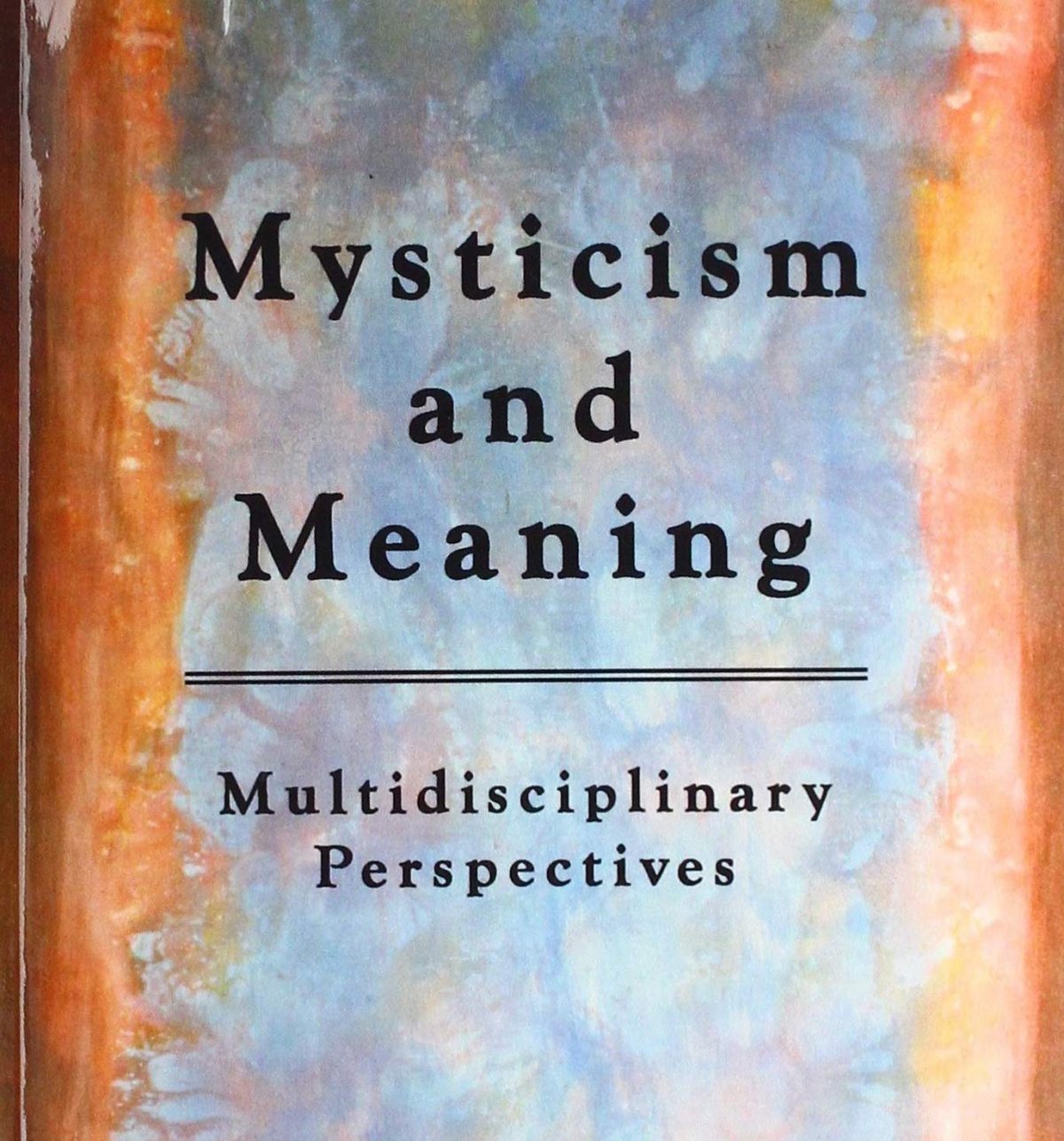
Mysticism and Meaning: Multidisciplinary Perspectives

A collection of academic essays edited by Alex Kohav that explores personal, theoretical, and historical dimensions of mystical experience. Alex contacted me about including my New York Times piece “The Anxiety of the Long-Distance Meditator” – all about striving to get to “initial enlightenment” via advanced meditation. It didn’t really work.

A collection of academic essays edited by Alex Kohav that explores personal, theoretical, and historical dimensions of mystical experience. Alex contacted me about including my New York Times piece “The Anxiety of the Long-Distance Meditator” – all about striving to get to “initial enlightenment” via advanced meditation.


Democratizing Mental Health

Far from being passive, I see meditation as a kind of activism, one that, right now, is sweeping the culture. If you’re reading this, you are part of that movement, a movement of sanity and community and genuine caring for others.

“The next Buddha is community”
– Thich Nhat Hahn

I was first exposed to meditation as a young university student in Montreal. A friend invited me to a meeting in the basement of the Student Union building on McTavish. For thirty excruciating minutes, I squirmed in my chair while a dozen or so other attendees sat with their eyes closed, seemingly quite peaceful. 

“The world won’t be changed by people who can’t see it,” I told a friend afterwards. I thought that was a real zinger. Then I got drunk at the bar upstairs and barfed on my shoes. Exemplar!

What are we doing when we take up meditation?

My view on this has changed since those early days. The world is riven with strife and inequity. Intentional practice, and this includes meditation, is one of the solutions. I’d argue that despite its passive optics, meditation is actually a kind of activism, one that, right now, is sweeping the culture. If you’re reading this, you are part of that movement, a movement of sanity and empowerment and increased mental health transparency. It is also a movement of caring for others.

These practices change our internal conditions so we can better address our external conditions. Ask my wife who the prime beneficiary of my meditation practice is. Sitting helps both of us show up to our work and our marriage; it’s an infusion of clarity and understanding into our otherwise crazy days. 

This gets amplified when people sit in community, because all of a sudden all this normalization happens. You mean it’s okay to have a hard time in life, to seek support, to share our struggles and our breakthroughs? Yes. Being human takes practice. I’m not sure anyone gets to be born and just coast. 

Why “democratization”? Because good instruction is becoming more accessible. Because there are fewer barriers to finding and creating dependable support structures. Because there’s a practice for each of us, and we’re the ones who get to choose and build and direct it.

This doesn’t need to look like formal sitting meditation, and for many it won’t. Talking and sharing about mental health – with friends, with community – is itself a deeply helpful practice. So is talking and sharing about the range of other practices out there, including what’s worked for us and what hasn’t. This happens from the bottom up, not the top down.

At our Consciousness Explorers Club retreats, we also learn to guide each other

I happen to think this ethic of empowerment and accessibility and community support can and should extend to teaching itself. We need more guides; informed amateurs can help.

So. Close your eyes, and watch your breath. Talk to someone about your experience, and listen to them talk about their own. If you feel inspired, you can even start your own local practice group with a few friends (or maybe a few grandmothers — see below). 

This is how sanity becomes a social movement.

Pass it on.

What I’ve Been Reading:

When Zimbabwe couldn’t support the mental health needs of its citizens, they empowered 400 grandmothers to step up – check out this article on the democratizing of mental health in Africa. Also see this Economist piece, about how counselling by amateurs costs little and can make a real impact.

Zimbabwean “Friendship Bench,” where regular folks help each other with mental health


Modern Wisdom Podcast with Chris Williamson

On this podcast Jeff and Chris Williamson discuss why introspective work should be taken as seriously as personal hygiene, how you can double the span of your life experience, what benefits occur when consistently practising meditation, and just why exploring our own consciousness is so difficult, yet rewarding.

On this podcast Jeff and Chris Williamson discuss why introspective work should be taken as seriously as personal hygiene, how you can double the span of your life experience, what benefits occur when consistently practising meditation, and just why exploring our own consciousness is so difficult, yet rewarding.

Also Available On

iTunes
Spotify
Google Podcasts
Stitcher
Youtube

Best Canadian Essays 2011

Does nature have an interior aspect – as we do – and if so, what is the relationship between that “mind” and ours? Do you have to be high to wonder about this?

“The Tourists of Consciousness,” by Jeff Warren. In The Best Canadian Essays 2011, edited by Christopher Doda and Ibi Kaslik, Tightrope Books, 2011.

My article “The Tourists of Consciousness” is anthologized in this volume. The piece is as much about our reductive scientific attitude as it is about the mind. Does nature have an interior aspect – as we do – and if so, what is the relationship between that “mind” and ours?  Whatever our intellectual authorities may tell us, this is an open question – perhaps the most important question we can ask when it comes to ecological health and wellbeing.

Anderson Cooper Town Hall with Jeff and Dan

At the famous 92nd street Y in New York, Jeff Warren joins Dan Harris, as they chat with  CNN’s Anderson Copper to discuss their new book, “Meditation for Fidgety Skeptics.”

In this video, Dan Harris and Jeff Warren – “The MacGyver of Meditation” in Dan’s words – join CNN’s Anderson Copper to discuss their new book, “Meditation for Fidgety Skeptics.” Jeff comes on stage at 37:30.

This event is part of 92Y Talks, home to the best civic conversations anywhere in the city. For decades, we’ve hosted incredible talks with some of the most influential leaders in culture, politics, business and the arts.

Cabin Fever: The Best New Canadian Nonfiction

Finally, one answer to a question that is top of everyone’s mind: what is it like to be a 10-ton echolocating sperm whale with stumpy flippers but excellent aqua-dynamics?

cabin-fever-bestweb1
“What is it Like to be a Whale OR The March of Perspective” by Jeff Warren. In Cabin Fever: The Best New Canadian Nonfiction, edited by Moira Farr and Ian Pearson, Thomas Allen Publishers, 2009.

Finally, the answer to a question that is top of everyone’s mind: what is it like to be a 10-ton echolocating sperm whale with stumpy flippers but excellent aqua-dynamics?

Piece’s real subject is animal consciousness – that is to say, the felt texture of animal experience, as opposed to animal “cognition” or animal “problem solving” or any of the other boring mechanical euphemisms that pass as inquiries into the animal mind these days. There is a revolution of perspective happening in the world of animals.

The whales are coming – hide the krill! A companion piece to this essay is my Reader’s Digest piece on whale personhood, here.


Algonquin Provincial Park

My first book. It took two months and they paid me six grand. Writing the wildlife guide was the highlight.

Algonquin Park BookFrommer’s Algonquin Provincial Park, 1st Edition. Toronto: CDG Books Canada, 2002.

My first book. Took me two months to write and Frommer’s paid me six grand. Best part of the book to write was the 30-page ecology guide, where I got to wax on about the mighty moose (“the wild-eyed bell-tower hunchback of the animal kingdom”) and other critters.

Here is an excerpt:

algonquin_fall_storm-webStorm Watching in Algonquin

My brother or I would remark on it first: the eerie calm, the still leaves, the whole forest tense as if holding its breath. We’d stand on the dock and watch the dark clouds mount across the lake. The hairs on the backs of our neck would stir before any ripples were visible on the water. And then the winds would start, racing ahead of the storm like the barking scouts of war.

This is when you had to dig in. The cedars would bend back and the padded foam on the deck seats would be ripped into the air and flung across the bay. The distant snarl of thunder would get louder and fork lightning would suddenly leap up all around us, great corrosive bolts sometimes twisting into pinwheels. Soon the forest would be roaring with wind and electricity. And still we’d sit, terrified, waiting for the payoff: the Wall of Water. It would sweep across the lake like a dense grey curtain, frothing over obstacles and blocking out the light. We’d wait until the last possible moment before turning and running for the cottage, our heels wet with the licks of rain but our faces dry in the receding cell of empty air. And I have done this too in Algonquin, and my tent has seemed very fragile indeed. But the wind dies and the heavy rain passes and half an hour later the sun comes out. With a spectacle so short, it’s worth paying attention to the details.

Environment Canada calls late-April to mid-October “summer severe weather season” in Ontario. Fierce thunderstorms blow in off the Great Lakes, on average 150 a year. Of these 15 or so produce the necessary wind rotations for tornadoes, huge pipes of striated air whose winds whip across the land at 200+ kilometres an hour. Algonquin bears the scars of these tornadoes in the form of felled trees – wide swaths of raised wilderness. But no need to get paranoid. The park only gets half a dozen or of these thunderstorms per summer, and tornados touch down only once every few years.

For the most part these storms are an observer’s sport, loud but distant. The scale of the landscape is so huge in Algonquin that it’s possible to watch multiple storm systems move slowly across opposite ends of the horizon like buffalo on a prairie. They rumble ominously as they graze, and their dark bellies are filled with lightning.

From Frommer’s Algonquin Provincial Park, 1st Edition, by Jeff Warren. Toronto: CDG Books Canada, 2002.

Canada on the Couch

For fun here is one the many satiric pieces I wrote and voiced for The Current. I play a neurotic Canada being psychoanalyzed about my unfulfilling relationship with the US.

right click here to download

canadaflag_webFor fun I’m including one the many satiric pieces I wrote and voiced for The Current. I play a neurotic Canada being psychoanalyzed about my unfulfilling relationship with the US. Someone enjoyed this first episode, so my bosses kept making me write new and progressively less funny episodes, until I finally had to leave the CBC altogether to escape. Joan Webber (from the German – “VEE-ber”) was my skilled producer, and my analyst was Vancouver’s Dr. Saul Miller. Best line is about Expo 67. So true.

The Dream Director

Publishing a book is a bit like firing one of those emergency flares into the air. You never know who it’s going to attract. Most of the time nobody. You set the flare off in the Arctic tundra, get excited for some human contact, the light dims, cold sets in, and you die of exposure. But once in awhile someone comes by to take a look. And once and a while they bring with them something really cool.

dreamdirectorthumb
Publishing a book is a bit like firing one of those emergency flares into the air. You never know who it’s going to attract. Most of the time nobody. You set the flare off in the Arctic tundra, get excited for some human contact, the light dims, cold sets in, and you die of exposure. But once in awhile someone comes by to take a look. Paul Williams saw my flare. I mean he really saw my flare. A year or so after Head Trip came out, he Facebooked me with a cryptic message. He had an invention partly inspired by my book that he wanted me to see. He showed me some photos. Explained the functionality. Asked me to write the manual. I was intrigued. Very intrigued. So I agreed. Paul had basically created a device that allows users to take advantage of many of the states I had covered in my book. A Mind Remixer.
dreamdirector-controller-copy

I wrote Head Trip not only because I love the mind and the brain and get a science journalist (ish) kick out of attempting to explain their difficult relationship, but also because I like to actively hack my mind; that is, to go on natural head trips that alter my experience of reality, without resorting to buying pills off some sweaty guy at a rave. I’m interested in the special effects of consciousness, the primary phenomenological effects that are produced – or induced – when the mind is remixed. At the end of the book I even have a figure called “The Consciousness Mixing Board” which describes some of these effects. Dream hallucinations, body buzzes and hypnotic dissociations, degrees of alertness and clarity, degrees of absorption and relaxation, mindfulness in waking and in dreams, even bizarre psychosomatic phenomena – these are available in varying degrees across the expanse of consciousness, and may be primed with the right kind of suggestion, expectation, and – in some cases – intention.

I never thought anyone would actually invent one of these, but this is in essence what Paul Williams has done. As Paul told me when we first spoke, the Dream Director is basically a lab kit that could have come with my book. Note: “kit.” This is no one-night switch. Rather, it is a set of tools that can be experimented and played with over many months and even years. The applications are as limitless as the mind itself.

Though Paul didn’t realize it at the time, back in the 1890s, the American neurologist Leonard Corning built a device that is the progenitor of the Dream Director. Sleep researcher Robert Van Castle describes the contraption in his excellent book, Our Dreaming Mind: “His subjects slept with a leather hood over their heads which held metallic saucers in place over each ear. Music was delivered through a long piece of tubing connected to an Edison phonograph.” Later Corning would add a stereopticon – ancestor of the film projector – to cast “chromatoscopic images” onto the wall in front of the sleeper. Though the effectiveness of the projections is disputable, Corning claimed the music (usually Wagner) produced salutary, even transcendent dreams.

corningsstereopticonweb

Practice: Vehicles vs Parts

Imagine a post-Apocalyptic landscape filled with careening hot rods, all kitted out with various high performance stylings, and all of them moving in the same direction. In this metaphor, our armada of vehicles represent the world’s contemplative and personal growth practices. They are beautiful in their freakish diversity.

“You wanna get through this? Do as I say.”
– Charlize Theron, Mad Max: Fury Road

I’ve been trying to find a way to bring the Road Warrior gimp with the double-necked flaming guitar into my meditation teaching, and I think I finally have it.

Imagine a post-Apocalyptic landscape filled with careening hot rods, all kitted out with various high performance stylings, and all of them moving in the same direction. Let’s call this direction “human fulfillment,” a rather vague notion that of course will look different depending on the person, but is nevertheless there for many of us as a kind of loose aspiration.

In this metaphor, our armada of vehicles represent the world’s contemplative and personal growth practices. They are all, roughly, about personal and collective freedom, whether they focus on ultimate ends, or on immediate challenges and opportunities. They are also all quite beautiful in their freakish diversity and exoticism. Can we celebrate them?

Yes we can.

We have the fire-breathing Namaste monster truck, with flowing red streamers and a team of flexible yogis up top, mooning the landscape with their downward dogs.

We have the spooky Zen hover craft, floating high above the action, occasionally dispensing a brisk keisaku thwack when its driver gets sleepy.

We have a Sufi flying carpet (undulating with devotional dervishes), a Catholic chain of bubble campers (strung one behind the other like a line of rosary beads), and, lest we forget, the boring Mindfulness Based Stress Reduction delivery van (no colourful decals; but it does get decent gas mileage).

There are dozens of these traditions, and, if we parse them out by technique, the number of vehicles expands into the thousands. We can also include Western humanistic, artistic and psychotherapeutic traditions, all of whom are interested in the question of the good life, and all of whom have their own thoughts and procedures and protocols.

And actually, we can expand this number even further, because, in a sense, every human being is really their own practice tradition in waiting. That is, there’s a way of taking exactly who you are and what you love and turning it into a deliberate customized practice, with all the benefits and insights practice can confer. There are endless ways of committing ourselves in this strange adventure called life.

So … what is your vehicle? If you’re not sure, no problem – you can build one. You just need the right parts.

What Parts?

There are many potential ones, obviously – we are complex creatures with many proclivities and capacities. I’m interested in three in particular: a steering system, a windshield, and good old-fashioned engine grease.

The steering system is concentration – our capacity to stay with an action or direction, which leads to more absorption and flow and stability.

The windshield is clarity – the skill of discernment, of bringing new subtleties into experience, which leads to insight and awareness.

Finally, the engine grease is equanimity, the skill of frictionless non-interference, which allows us to be present to the world exactly as it is. Equanimity is the precondition for real connection and grounding, to say nothing of intelligent and effective action in the world.

When all three of these parts work together, we create the groundwork for love, the ultimate emergent part that ennobles all vehicles. I’ve written a little more about these parts in a companion essay: “What is a Practice, Anyway?’

The claim I want to make in this post is that, insofar as any practice technique is successful in a deep sense, it will always have at least two of these pieces (the steering system and the grease), and often all three.

The vehicles themselves may look wildly different – one might look like meditating on your breath, another like feeling “energy” in a Qi Gong sequence, and a third like looking through a telescope at the stars. Endless forms most beautiful. And form does matter – in all kinds of ways, particularly in matters of taste. But we are more concerned with function here.

When I encounter a practice – when I encounter a practitioner, of any kind, from artist to meditator to philosopher – these are the parts I wonder about. Where and how does this person build concentration, and clarity, and equanimity?

This is the backbone of what I teach, and the direction I’m heading in a new workshop and book, co-authored with my pal Julianna Raye, provisionally entitled How to Teach Meditation: A Guide for Everyone.

The book’s thesis is not that everyone should either have or teach a sitting meditation practice. It is, rather, that everyone should have a rudimentary understanding of the role of concentration, clarity and equanimity in both practice (whatever vehicle you build), and in life. Just as every human being – every parent, caregiver, teacher and friend – should have a rudimentary understanding of the value of a healthy diet and physical exercise.

So it’s about unpacking the central skills of meditation, in order to help people find a way not only to apply them to their unique nervous systems, but also to help others do the same. When we do the latter, not only does our own practice accelerate, but we begin to lay the groundwork for a world where everyone cares for everyone else’s mental, emotional and spiritual health. That’s a world I want to live in.

This can be done in a way that’s sensible and inclusive and fun, without any precious ‘Behold I Am the Teacher’ vibe. It can even be done with a flaming double-necked air guitar of existential radness – because, well, why not? Air guitar is a practice too. With enough equanimity, you may learn you’re actually playing for everyone.

END


PS – My vehicle is a pedal bike.

And speaking of kids, I’m having a fun time writing and voicing imagination-infused meditations for youngsters aged 6 – 12, with my communications guru pal Kirsten Chase. You can listen to some here. We want to make a YouTube channel for them, and are looking for smart partners and investors to make it happen. If you have ideas, contact Kidevolve here.


What is a “Practice,” Anyway?

Suddenly: you exist. You didn’t plan it or ask for it, but existence happened, and now, after a bunch of years bumping into coffee tables and staring at trees, full self-consciousness has flickered on, and you’re like: ‘wait a second … where am I? Who am I? And what am I supposed to DO here?’

“We are what we repeatedly do”
Not Aristotle

Let’s start with the big picture:

Suddenly: you exist. You didn’t plan it or ask for it, but existence happened, and now, after a bunch of years bumping into coffee tables and staring at trees and being unconsciously embedded in your youthful umwelt, full self-consciousness has flickered on, and you may be like: ‘wait a second … where am I? Who am I? And how do I conduct myself on this strange planet in this remote corner of the Milky Way galaxy in this Year of our Lord 2018 (Anno Domini), to use our culture’s rather arbitrary Gregorian dating system?’

Excellent questions! Of course I have no idea.

Here’s what I do know:

There is No Neutral Setting*
(*see footnote for mystical caveat)

We don’t just exist; we exist in a particular way – that is, for most of us, our being is actually a doing. We act and think in certain ways, and the more we repeat these behaviour and thought patterns, the more entrenched they get.

We are literally creatures of habit, and for the first big chunk of our lives we don’t choose what habits we’re building. If we’re lucky we may have had good role models to emulate, but even then, we all acquire some unhealthy habits, it can’t be avoided. Habits of stress and reactivity and impatience and self-pity and furious over-thinking and avoidance and all the rest, to say nothing of our many deranged physical and social and (sigh) voting habits.

These habits don’t stay the same either; rather, they get deeper and more entrenched the more they’re repeated. And, for most of us anyway, eventually our unhealthy habits catch up with us. All of a sudden, we realize this thing that we do, this once-subtle habit of reactivity or defensiveness or anxiety that we’ve had kind of going on in the background, is now screwing us: screwing our relationships, our work, our life, whatever. This is our wake-up call, and the call to more intentional practice.

What is a practice?

The simplest definition of practice is some action – mental, emotional, physical, social – that you choose and repeat, so that it can become a habit. It is the deliberate cultivation of habits you want. These habits may begin in a narrow domain – on the meditation cushion, in the gym, in the artist studio – but it becomes a true practice in the broadest sense when it begins to move out into the rest of your life. These kinds of habits are less physical actions, than ways of being and relating.

Contemplative practices are exactly this. They are practices that rehearse how you want to exist. They are very ambitious.

Meditating in stillness provides the ideal training ground for this, because the conditions are so simple and the comparative distractions so few. But the piece that’s important to realize here is any activity can be a practice in this broad sense, because what matters is less the external “form” of the practice – whether you focus on your breath, your basketball game, or your relationships – but the skills and attitudes and intentions you bring to that form. Those skills and attitudes are what we’re talking about; they are the most elemental things a human can train in life.

Elemental Things

This idea is thrilling to me. It’s the riddle I continuously ponder as a journalist and writer and meditation teacher: what are the absolute most fundamental qualities a human being can cultivate that will make a positive difference in their life, and how to you impart that?

There’s no master list here obviously, and the pie can be cut many ways. What’s more, much of this will depend on our personal intentions and our cultural values. But three skills in particular seem to come around again and again. At the very least they underlie all the mindfulness and meditation and artistic and movement practices that I both teach and do myself. I have my teacher Shinzen Young to thank for making them explicit for me.

  • Concentration– the skill of commitment, of devoting attention to some object or in some direction. When we focus, there’s a tendency for the thing we’re focusing on to become more stable, and if we hold our attention long enough, we can have the experience of flowing and merging with that activity or object. In this sense, concentration can be said to create our reality. Concentration is also the great protector, because when we apply ourselves in this way, our anxious thoughts have less room to make an appearance. Concentration leads to more peace and stability.
  • Clarity – the skill of discernment, of awareness. It is the part of us capable both of panning out to a broader perspective, and of zooming in to notice previously unconscious habits of thinking and responding. Over time, if we pay close attention, it can lead us to deep insights about the nature of mind and being. In all these senses, clarity can be said to expand our reality, for it expands what is available to our seeing. It is also what allows us to notice difference, thus, clarity lays the groundwork for understanding and justice. Clarity leads to more wisdom and perspective.
  • Equanimity – the skill of opening, of non-interference with moment-to-moment sensory experience. Equanimity is getting so entirely out of our own way that – in a manner of speaking – we become reality, reality noticing itself becoming reality, again and again, in a backwards loop of cosmic giddy what-the-fuckery? (to quote reality).  That’s the, er, rather over-the-top mystical side. There’s also a deeply practical side: acceptance. Equanimity is the mature and respectful and generous stance of allowing the people around you, the world, and yourself be exactly who and what they are, flaws and all. It is the paradoxical place from which true effective change-making begins. Equanimity leads to more connection and freedom.

We can all use a reminder of these skills. We can learn to implement them even now as we read this. We can carry them in our bodies and into our days. We make life our practice when we deliberately activate these elemental things.

What about love?

Love is what happens when all three of these qualities work together, mutually supporting and reinforcing each other. When we’re committed and aware and open, things have a habit (there’s that word again) of skewing towards more intimacy and compassion. It feels like the most natural thing in the world, for there is less and less of a special self in the world to defend and promote. As we learn to get out of our own way, we make room for more effective and caring responses.

And that’s all I have to say on the matter! Your grandpappy could have explained all this to you, though maybe not with so many fancy words. He’d just say: do things well, pay attention, be humble. Don’t make it complicated. Find your form – your movement, your breath, your work – and commit. The rest will follow.

Practice well my friends.

*Footnote
RE, no neutral setting: one of the central ideas of Indian philosophy is that there IS a neutral setting. They call it “moksha” – liberation. In this understanding, as the practitioner develops in equanimity, less and less reactive conditioning is said to “stick,” until they arrive at a place of complete emancipation from suffering.

Is moksha a realistic destination? I don’t know. I’m not sure it matters.  The history of comparative mysticism tells us that, at the very least, it is a realistic direction we can move towards. We may not be able to find final liberation, but we can begin to find more liberation. And that’s what I focus on in my work and teaching.

PS – I recently recorded a guided meditation that’s all about how to find the right practice for your particular interests and nervous system. You can listen to it here.

PPS – see Part 2 of this post, “Practice: Vehicle vs Parts

Bounce with Larry Weeks

Larry Weeks: “This is a podcast about training how you want to exist in the world. You’re training how to do this everyday. If you’re existing in a consistently negative state  – angry, fearful, stressful – that’s the habit you’re unconsciously training.”

Larry Weeks: “This is a podcast about training how you want to exist in the world. You’re training how to do this everyday. If you’re existing in a consistently negative state  – angry, fearful, stressful – that’s the habit you’re unconsciously training.” More from Jeff Warren …


More Info Here

The Wright Show with Robert Wright

From science journalist to meditation teacher. How ADD and bipolar tendencies shaped Jeff’s practice. Falling out of a tree while on mushrooms. The interaction between mindfulness, not-self, and suffering. Defining enlightenment. Varieties of consciousness. How meditation can shift your priorities.

Robert Wright (Bloggingheads.tvThe Evolution of GodNonzero,Why Buddhism Is True) and Jeff Warren

Some points:
-How Jeff went from science journalist to meditation teacher
-Jeff’s new book, co-authored with Dan Harris, Meditation for Fidgety Skeptics
-How ADD and bipolar tendencies shaped Jeff’s practice
-The life-changing experience of falling out of a tree while on mushrooms
-The interaction between mindfulness, not-self, and suffering
-Defining enlightenment
-The varieties of consciousness
-How meditation can shift your priorities


Audio only:

Download audio here (right click)

Waking Up Bipolar with Chris Cole

Chris Cole: “As you’ll hear in our conversation, Jeff Warren has an uncanny ability to both dive deep into mystical waters and also articulate the many practical benefits of taking up a meditation practice. I most appreciate his willingness to speak candidly about his experiences with ADHD.”

In this episode of Waking Up Bipolar, Chris Cole speaks with Jeff Warren—writer and meditation teacher. Jeff is the author of The Head Trip, a travel guide to sleeping, dreaming and waking, and co-author of the current New York Times bestselling Meditation for Fidgety Skeptics. He is also Founder of The Consciousness Explorers Club, a nonprofit meditation adventure group in Toronto.

As you’ll hear in our conversation, Jeff Warren has an uncanny ability to both dive deep into mystical waters and also articulate the many practical benefits of taking up a meditation practice. I most appreciate his willingness to speak candidly about his experiences with ADHD, and as fate would have it, a recent bipolar diagnosis.

More info and audio download available here